Research
We use behavioural, computational, electrophysiological and molecular-genetic tools to study how the neocortex and hippocampus encode information and communicate with each other. Our goal is to understand the neural mechanisms of memory, perception and predictive coding, and the functional role of sleep.
Hippocampal replay
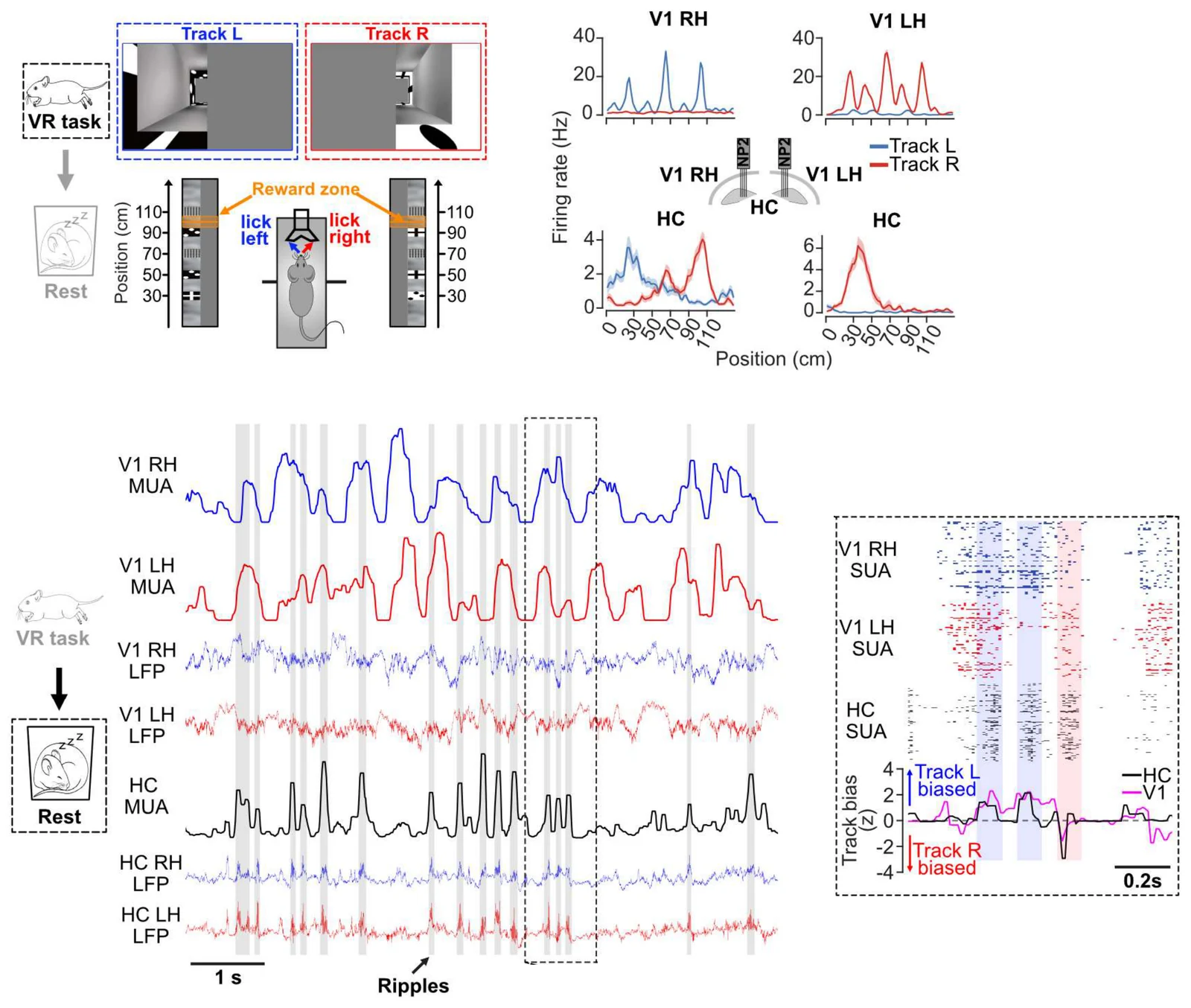
During rest and sleep, the hippocampus replays recent experience as brief, time-compressed sequences of place cell activity. We study what these events carry and how reliably they can be identified. Replay reinstates not only the order in which place cells fired but also the firing-rate differences they expressed between two environments. Because replay has no ground truth, we developed a framework that uses two-track experiments to evaluate replay detection methods. In a recent preprint, recording from the hippocampus and visual cortex together, we report that the interplay of sleep oscillations enhances coordinated memory reactivation in the two regions.
Selected papers
- Interplay of sleep neural oscillations enhances coordinated memory reactivation between cortex and hippocampus bioRxiv preprint (2026)Free to read
- Awake replay: off the clock but on the job Trends in Neurosciences, 48(4):257–267 (2025)Free PDF
- Evaluating hippocampal replay without a ground truth eLife, 13:e85635 (2024)Free to read
- Experience-driven rate modulation is reinstated during hippocampal replay eLife, 11:e79031 (2022)Free to read
- Biasing the content of hippocampal replay during sleep Nature Neuroscience, 15(10):1439–1444 (2012)Free full text
Memory triage
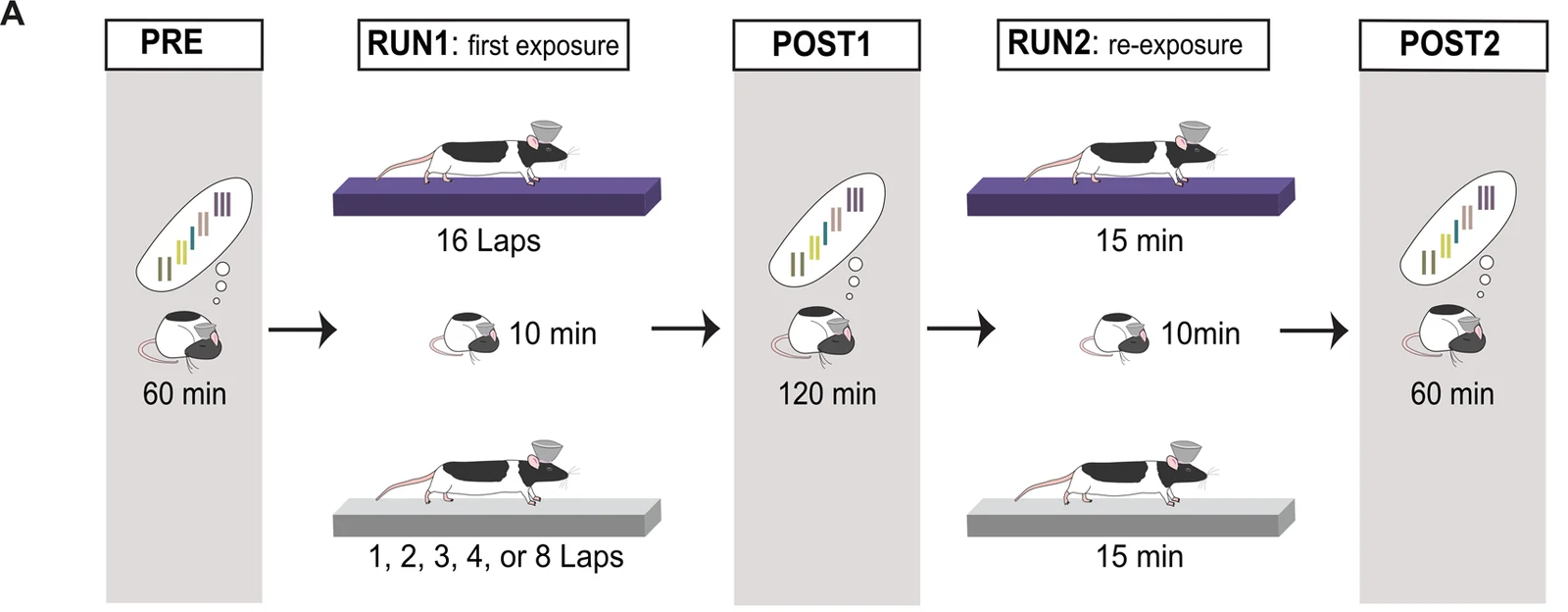
We cannot remember everything we experience, so the brain must select which memories to keep, a process often called memory triage. We study how replay carries out this selection. In rats, the more laps an animal runs on a track, the more that track is replayed during later sleep, and greater familiarity with a track reduces its replay. The number of awake replay events during an experience predicts which memories sleep replay favours. In a recent preprint, we report that time, not reward, shapes which experiences are prioritised for replay. To study triage in behaviour, we developed a serial novel object recognition task that measures memory capacity and prioritisation in mice.
Selected papers
- Time, but not reward, shapes replay-based episodic prioritization bioRxiv preprint (2026)Free PDF
- The role of experience in prioritizing hippocampal replay Nature Communications, 14(1):8157 (2023)Free PDF
- Memory capacity and prioritization in female mice Scientific Reports, 13(1):14073 (2023)Free PDF
- How Targeted Memory Reactivation Promotes the Selective Strengthening of Memories in Sleep Current Biology, 29(18):R906–R912 (2019)Free PDF
Predictive coding
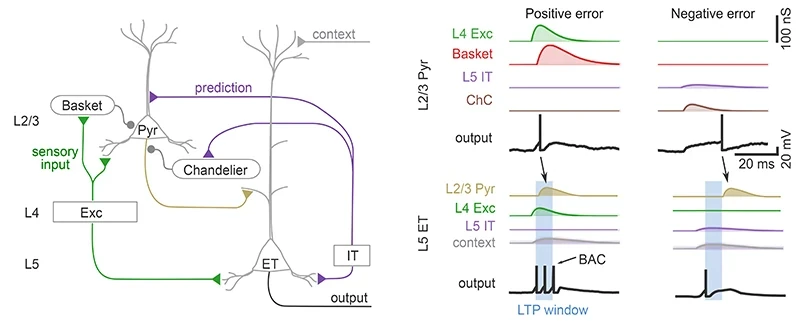
Perception depends on comparing what reaches the senses with what the brain expects. We study how cortical circuits compute the difference and, in particular, its sign: whether something unexpected occurred, or something expected failed to occur. In our Signed Error by Timing Asymmetry (SETA) model, chandelier cells control when layer 2/3 neurons fire, so that positive and negative errors reach their layer 5 targets in opposite windows for synaptic plasticity. We test its predictions with recordings from the visual and auditory cortex and the hippocampus.
Selected papers
- Temporal Gating by Chandelier Cells Encodes Signed Prediction Errors bioRxiv preprint (2026)Free to read
- Does the Hippocampus Map Out the Future? Trends in Cognitive Sciences, 20(3):167–169 (2016)Free PDF
Auditory cortex and the coding of time and pitch
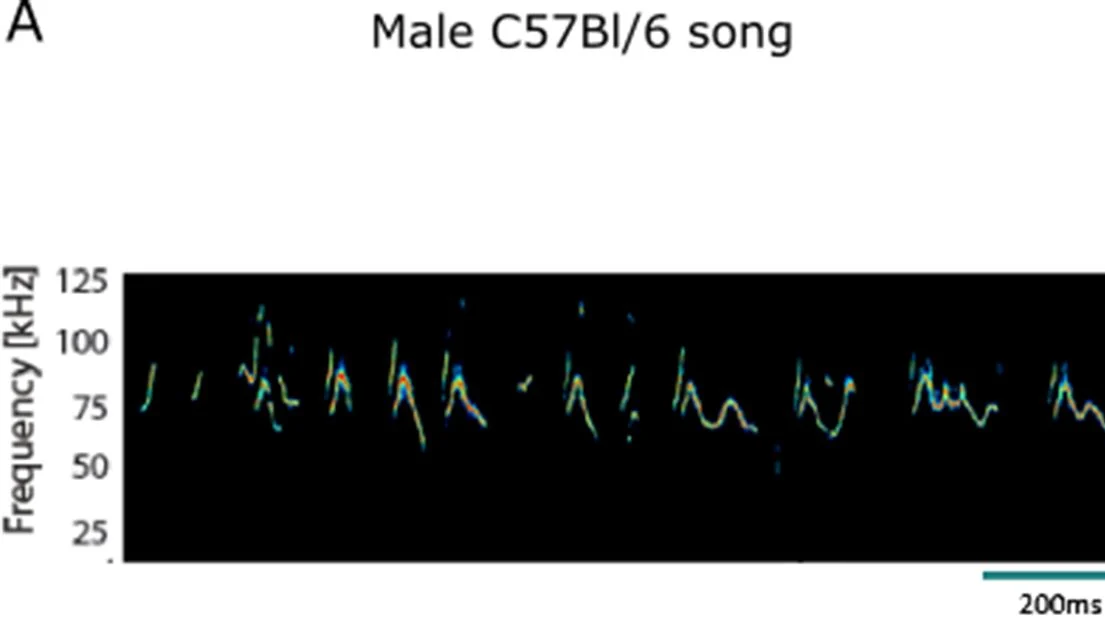
Sounds unfold in time, and the auditory cortex must represent both when acoustic events occur and the pitch they produce. In marmosets, we identified pitch-selective neurons near the anterolateral border of primary auditory cortex. The timing of repeated sounds is carried by two complementary codes: one locked to each event and one based on firing rate. Computational models trace these codes to the timing and balance of excitation and inhibition, and to short-term synaptic depression. More recently, we found that female mice are sensitive to the temporal regularity of male courtship songs, but not to changes in syllable order or syllable structure.
Selected papers
- Courtship behaviour reveals temporal regularity is a critical social cue in mouse communication eLife, 12:RP86464 (2023)Free to read
- The role of adaptation in generating monotonic rate codes in auditory cortex PLOS Computational Biology, 16(2):e1007627 (2020)Free PDF
- The Role of Inhibition in a Computational Model of an Auditory Cortical Neuron during the Encoding of Temporal Information PLOS Computational Biology, 11(4):e1004197 (2015)Free PDF
- Differential neural coding of acoustic flutter within primate auditory cortex Nature Neuroscience, 10(6):763–771 (2007)
- The neuronal representation of pitch in primate auditory cortex Nature, 436(7054):1161–1165 (2005)Free full text